Anatomy and Physiology
The structure and function of the human body as the scientific basis of nursing care.
A four-year undergraduate programme designed to build a strong foundation in nursing science, patient care, clinical decision-making, community health, research, leadership, and professional ethics.
The Bachelor of Science in Nursing programme prepares students to deliver safe, ethical, evidence-informed, and patient-centred care across hospital and community settings.
The programme combines nursing science, foundational health sciences, supervised laboratory practice, clinical rotations, research exposure, leadership development, and community-health learning.
B.Sc. Nursing is a four-year undergraduate programme designed to build a strong foundation in nursing science, patient care, clinical decision-making, community health, research, leadership, and professional ethics. Students learn through classroom instruction, laboratory practice, hospital rotations, specialty postings, and community-based experience.
The training given to students equips them with professional expertise so that they can provide society with a relevant, adequate, affordable, accessible, effective and efficient health care delivery system as per the need of the community, and also enables them to assist and implement the health development programmes that are crucial in building up a nation.
| Programme Detail | Information |
|---|---|
| Programme | Bachelor of Science in Nursing (B.Sc. Nursing) |
| Duration | 4 years, including integrated clinical practice and internships |
| Annual Intake | 50 students |
| Learning Mode | Classroom instruction, laboratory practice, simulation, clinical postings, community experience, assignments, and professional activities |
| Selection | As per the merit, entrance, counselling, and regulatory process notified for the relevant academic year |
Foundational sciences, core nursing specialties and professional practice, taught in sequence across the four years of the programme.
The structure and function of the human body as the scientific basis of nursing care.
Diet, therapeutic nutrition and the basic sciences that support clinical practice.
Drug action, dosage, administration and the safety checks that protect patients.
Principles, values, procedures, communication and professional responsibility.
Care of adult patients managed medically, pharmacologically or surgically.
Growth, development, health promotion and nursing care from the newborn period onwards.
Pregnancy, childbirth, the postnatal period and women’s health care.
Public health concepts applied in family, school, rural and urban settings.
Mental wellbeing, therapeutic communication, prevention and supportive care.
Nursing research, evidence-based practice, leadership and management of care.
 Hospital-based learning
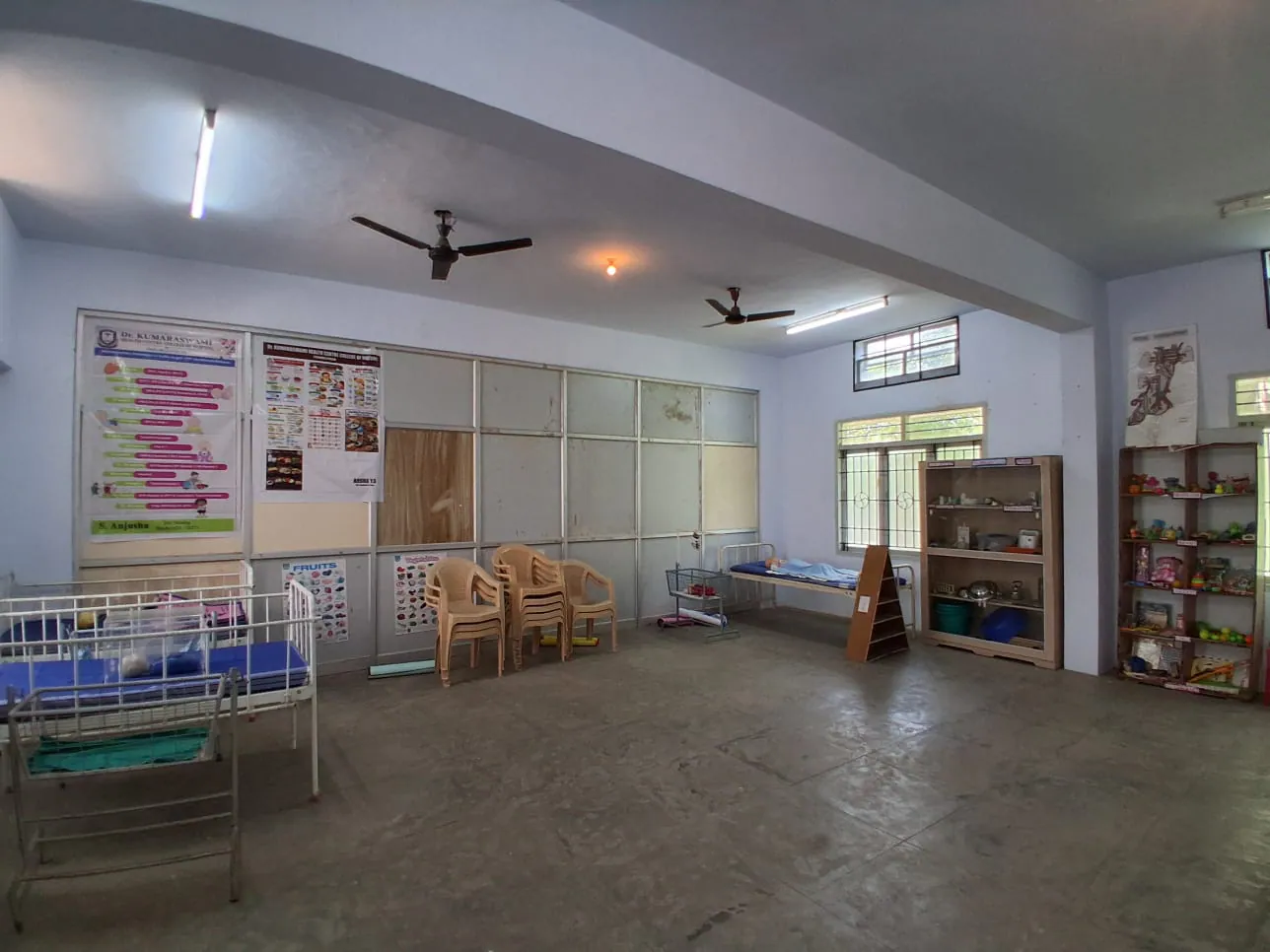
Students receive progressive, supervised experience through nursing laboratories, clinical simulation, hospital rotations, specialty departments, intensive-care and emergency settings, paediatric services, maternal-health areas, rural health centres, urban health postings, village-health activities, and community-based programmes.
Practical training is designed to connect classroom concepts with safe and confident patient care.
Applicants must satisfy the current academic, age, subject, medical-fitness, registration, counselling, selection, and document requirements prescribed by the Government of Tamil Nadu, The Tamil Nadu Dr. M.G.R. Medical University, the nursing councils, and other competent authorities for the relevant admission year. Selection may be based on merit and/or an entrance or counselling process, as applicable.
B.Sc. Nursing graduates can pursue a wide range of patient-care, community-health, education, research, quality, and administrative pathways. Appointment eligibility depends on professional registration, employer requirements, recruitment rules, experience, and any additional qualifications or licensing required for the role or country.
| Career Area | Illustrative Opportunities |
|---|---|
| Hospital and Clinical Care | Staff Nurse, Nursing Officer, Ward Nurse, ICU Nurse, Emergency Nurse, Operation Theatre Nurse, Medical-Surgical Nurse, Paediatric Nurse, Maternal-Health Nurse, Mental-Health Nurse, and other specialty roles after suitable orientation or experience. |
| Community and Public Health | Community Health Nurse, Public Health Nurse, outreach nurse, school-health nurse, occupational-health support, health educator, and roles in government or non-government health programmes, subject to recruitment norms. |
| Quality and Patient Safety | Infection-control support, quality-improvement coordinator, patient-safety support, clinical documentation, and audit-related nursing roles after appropriate experience and training. |
| Education and Training | Clinical instructor, nursing tutor, skills-lab trainer, or academic roles after meeting prescribed experience and higher-qualification requirements. |
| Research and Projects | Research assistant, clinical-research coordinator, project nurse, survey coordinator, or community-health project roles. |
| Healthcare Administration | Ward management, nursing administration, hospital operations, healthcare coordination, and supervisory roles after relevant experience or postgraduate study. |
| Government and Institutional Services | Opportunities may arise in government hospitals, public-health departments, defence services, railways, ESI institutions, teaching hospitals, and other public bodies through the applicable recruitment process. |
| Home and Continuing Care | Home-health nurse, elder-care nurse, rehabilitation support, palliative-care support, and chronic-care coordination, depending on employer requirements. |
| International Nursing | Overseas nursing opportunities may be pursued after satisfying the destination country’s registration, licensing, language, examination, immigration, and experience requirements. |